Designing Your Week Around Energy, Not Hours
Chris Martinez
06/27/2026
5 min read
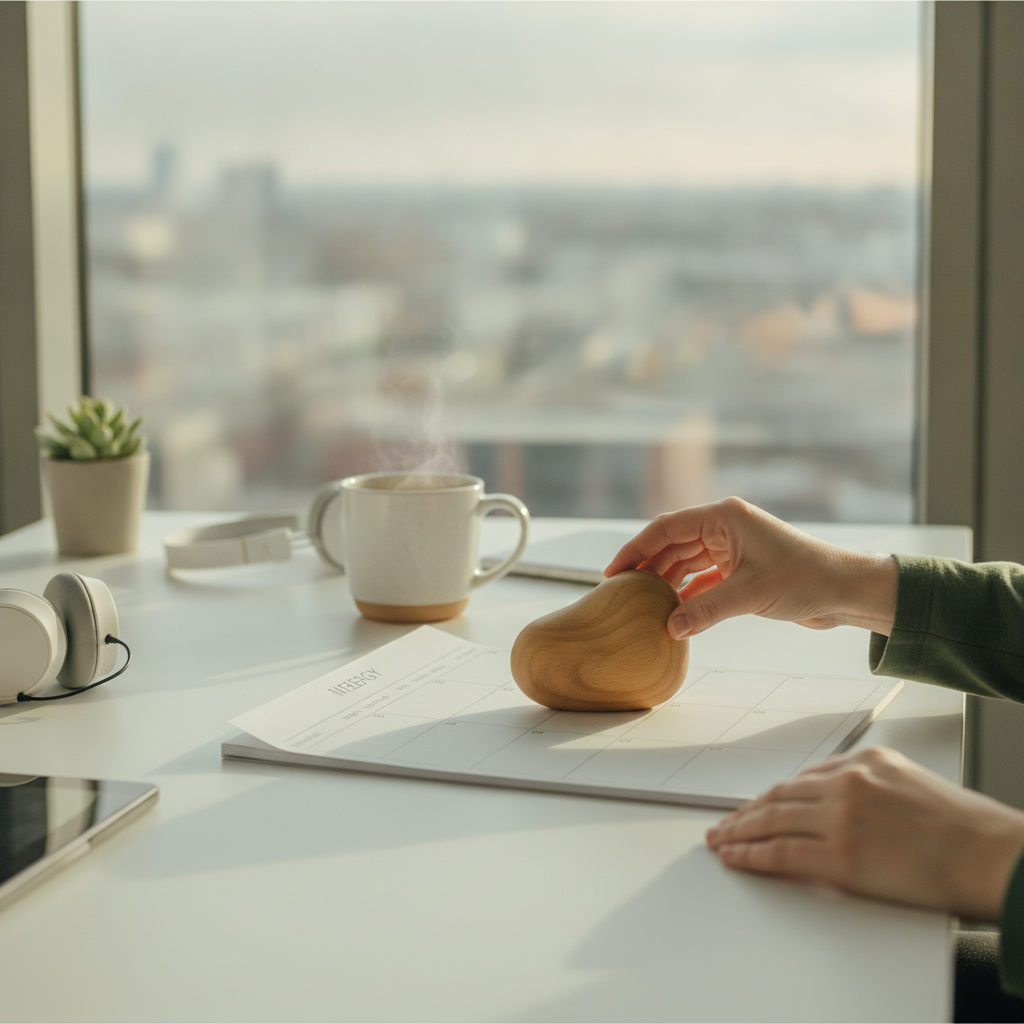
Most people plan their weeks the same way they were taught to plan an exam schedule — block the hours, fill the slots, and trust that discipline will carry the rest. It's a framework built on the assumption that human output is consistent, that nine in the morning is the same nine in the morning every day, regardless of sleep, season, or the slow accumulation of everything else life asks of a person. A quiet but meaningful shift is underway, though. More people are stepping back from the tyranny of the time block and beginning to organize their days around something more fluid and arguably more honest: the natural rhythm of their own energy.
The Limits of Clock-Based Productivity
For generations, productivity has been measured in hours. The eight-hour workday, the packed calendar, the back-to-back meeting — all of it assumes that showing up is the same as performing, that presence equals output. But anyone who has sat at a desk at four in the afternoon, staring at a task that would have taken twenty minutes at ten in the morning, understands intuitively that this equation doesn't hold. Time is fixed and equal; energy is neither. The growing recognition of this gap is what's quietly pushing people toward a different model — one that treats personal energy as the true unit of work.
What Chronobiology Reveals About Daily Rhythm
Chronobiology — the study of biological rhythms and their effects on living organisms — has long described how the human body moves through predictable cycles throughout the day. These cycles, governed largely by the circadian rhythm, influence alertness, mood, creativity, and even physical strength at different hours. Most people experience a natural peak of cognitive clarity in the late morning, a dip in early-to-mid afternoon, and a secondary lift in the early evening. These aren't personal quirks; they're physiological patterns. Understanding them isn't about gaming the system — it's about working with a body that was never designed to perform uniformly across sixteen waking hours.
The Rise of Ultradian Rhythms in Everyday Planning
Beyond the daily arc of the circadian rhythm sits another concept gaining quiet traction in wellness and productivity circles: the ultradian rhythm. These are shorter cycles, roughly ninety minutes in length, during which the brain moves from higher to lower states of alertness before resetting. The idea, drawn from sleep science and applied to waking life, suggests that sustained focus naturally plateaus after about ninety minutes, and that brief recovery periods — ten to twenty minutes of rest, movement, or mental disengagement — allow the cycle to begin again with renewed clarity. Apps like Reclaim.ai are beginning to build scheduling tools around exactly this kind of rhythm-aware framework, allowing users to protect blocks of deep work followed by genuine rest.
How People Are Restructuring the Work Week
The practical applications of energy-aware scheduling vary considerably from person to person, but certain patterns are emerging. Some people front-load demanding cognitive work — writing, analysis, strategic thinking — in the late morning window when alertness tends to peak, reserving administrative tasks, emails, and low-stakes meetings for the afternoon dip. Others build what some coaches now call "recovery architecture" into their weeks: deliberate whitespace on Wednesday afternoons, or a standing rule against early-morning calls on Mondays. Companies in cities like Amsterdam and Auckland have begun experimenting with four-day work weeks not simply to reduce hours, but to concentrate energy more intentionally across fewer days.
The Role of Rest as a Performance Variable
One of the more significant reframings that comes with energy-based scheduling is the elevation of rest from passive recovery to active strategy. In a clock-based model, rest is what happens when work ends. In an energy-based model, rest is woven into the structure of the day because the quality of focused work depends directly on it. This isn't simply about sleep, though sleep remains foundational. It encompasses short walks, genuine lunch breaks away from screens, and even transitions between tasks that give the nervous system room to shift gears. Research into attention restoration — a concept from environmental psychology — suggests that even brief exposure to natural settings can meaningfully replenish depleted focus.
Why This Approach Resonates Beyond the Workplace
Energy-aware thinking doesn't stop at professional life. People are applying the same logic to social commitments, creative pursuits, and self-care. A person who recognizes that they're naturally more extroverted and open in the early evening might schedule meaningful social plans then, rather than forcing connection into a lunch hour that falls squarely in a cognitive trough. Someone working on a creative project might protect their highest-energy mornings for that work before turning to anything else. Platforms like Notion are being used to map personal energy patterns across weeks, helping people spot where they consistently feel depleted and redesign their routines accordingly.
Building a Week That Reflects How You Actually Function
If you're beginning to experiment with this approach, the first step is observation rather than optimization. Spend a week or two simply noticing — without judgment — when you feel most alert, most creative, most socially engaged, and most in need of quiet. Track the patterns across different days, not just individual hours, because energy is shaped by the accumulation of a week, not just a morning. From there, small structural shifts tend to matter more than dramatic overhauls: protecting one deep-work window per day, introducing a genuine midday break, or shifting one draining commitment to a time when you're naturally better resourced for it. The goal isn't a perfect schedule; it's a schedule that's honest about the person actually living it.
The idea that hours are interchangeable was always a simplification — useful for coordination, but thin on truth. What's emerging now is something older than productivity culture and more fundamental: an attentiveness to the body's own intelligence, the kind that knows when to push and when to pause. Designing a week around energy isn't a rejection of structure. It's a more sophisticated form of it, one built around the grain of a life rather than against it.