How Treating Your Home Entryway as a Transition Zone Changes How You Decompress After Work
Emily Rodriguez
07/25/2026
6 min read
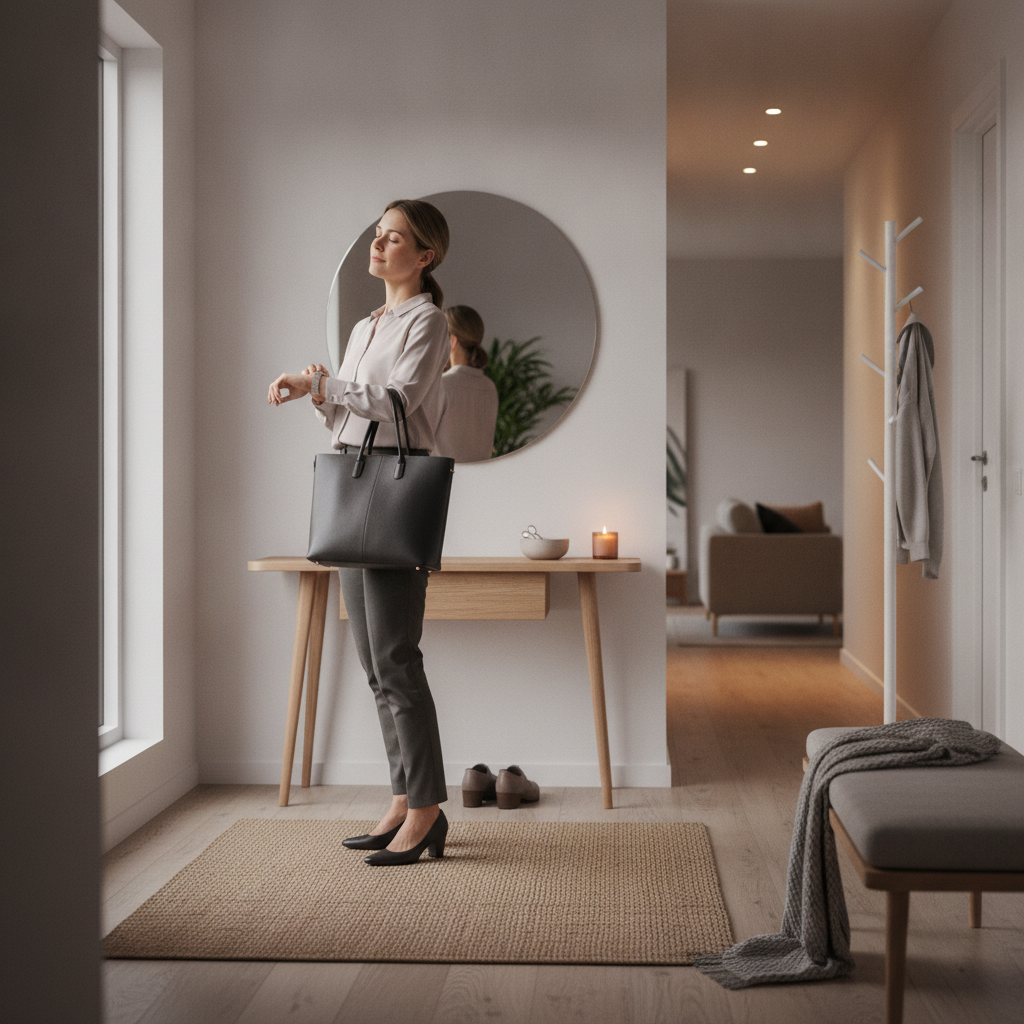
Most people walk through their front door still carrying the day — mentally replaying a meeting, checking one last email, or already thinking about dinner while their coat is still on. The shift from work mode to home mode doesn't happen automatically, and for a lot of people, it doesn't really happen at all. The evening blurs into an extension of the workday, and genuine rest stays just out of reach.
The good news is that the solution doesn't require a wellness overhaul or a redesigned home. It starts at the door.
Treating your entryway as a deliberate transition zone — a psychological airlock between your professional self and your personal life — can quietly change how the rest of your evening feels. These practical shifts don't take long to implement, and the effect tends to build over time.
What Does a "Transition Zone" Actually Mean?
A transition zone is simply a physical space you move through with intention. In architecture and urban design, these are the thresholds between different environments — the lobby of a building, the covered walkway between a parking garage and a store. They exist to ease the shift from one context to another. Applying the same logic to your home entryway means using that small space to signal to your brain that the mode is changing. It's less about decor and more about behavior: what you do in those first two minutes inside the door sets the tone for the whole evening.
How Does Physical Unloading Shift Your Mental State?
One of the most consistent ways to signal that work is done is to physically separate yourself from the tools of work. Place your bag in the same spot every day. Set your laptop down, take off your shoes, and if you wear a work lanyard or ID badge, remove it before you do anything else. These small physical acts create a sensory break that your nervous system can actually register. Apps like Calm or Headspace often recommend micro-rituals for exactly this reason — your brain responds to repeated physical cues. The entryway gives you a natural place to build them.
Why Does Changing Your Clothes Right at the Door Work So Well?
Changing out of work clothes as soon as you walk in isn't just comfort — it's a boundary. What you wear carries context, and that context follows you around the house if you let it. Keeping a dedicated hook or small shelf in or near your entryway for your "transition" clothes makes the swap effortless. Cozy Japanese-inspired loungewear brands like Muji have built entire product lines around this idea, recognizing that comfort-oriented clothing is partly a psychological tool. When you physically change, you give yourself permission to stop performing and just exist.
How Can You Use Scent as a Decompression Signal?
Scent is one of the fastest routes to a mood shift because of how directly it connects to the brain's emotional processing centers. A small diffuser near the entryway — running something grounding like cedarwood, eucalyptus, or bergamot — creates an immediate sensory contrast to the neutral or stressful environments most people spend their workday in. Brands like Vitruvi or Pura make diffusers designed for smaller spaces, which makes an entryway application practical even in a tight apartment hallway. The scent doesn't need to be elaborate. Consistency matters more than complexity — the same smell, repeated daily, becomes its own unwinding cue.
What Role Does Sound Play in Resetting After Work?
The sounds that follow you home — traffic noise, podcast voices, the tail end of a work call — can keep your nervous system in a heightened state without you even realizing it. Building a short audio ritual into your entryway moment helps close that gap. Some people put on a specific playlist the second they walk in; others prefer two or three minutes of genuine quiet before any media starts. The point is choosing the sound environment rather than letting it default to whatever noise trails in from the day. Even a brief, intentional silence can reset your baseline.
How Do You Keep Work From Creeping Back In During the Evening?
One of the most practical things you can do at the door is establish a "no re-entry" rule for work tasks. Leave your work bag in the entryway, not in the living room or bedroom. If your laptop needs to charge, charge it there. Keeping work tools physically close to the door reinforces the idea that they belong to the coming-and-going part of life, not the settled, at-home part. Neighborhoods in cities like Portland and Amsterdam have entire concepts built around the idea of the home as sanctuary — but it only functions that way if you maintain the boundary.
Why Does a Small Visual Reset in the Entryway Matter?
Clutter at the door is one of those things that registers subconsciously even when you're not actively noticing it. Shoes piled up, mail scattered across a table, reusable bags in a heap — these small visual stressors add to a low-level sense of disorder that makes genuine rest harder to reach. Spending two minutes keeping the entryway clear and organized each evening reinforces the idea that home is a different kind of space. It doesn't need to look like an interior design shoot; it just needs to feel intentional. A clean threshold communicates calm before you've even moved into the rest of your home.
How Can a Brief Pause at the Door Change Your Whole Evening?
Perhaps the simplest shift of all is just stopping. Pausing at the door for thirty seconds before moving into the house gives your brain a moment to register that a shift is happening. Take a breath. Notice the temperature of the room, the smell, the quiet. This kind of brief, mindful pause is something many mindfulness traditions recommend as a grounding technique, and it works precisely because it's so small. You're not committing to a meditation practice or a journaling habit. You're just giving yourself the space of a single breath before you step fully into the rest of your day.
Your entryway is probably the most underutilized space in your home. It doesn't take a renovation or a major routine change to start using it differently — just a few consistent choices made in the first moments after you walk in. Start with one shift this week, something as simple as leaving your work bag at the door or lighting a candle when you arrive. Small rituals, repeated consistently, have a way of quietly reshaping how the whole evening feels.