How to Spot a Quality Linen Piece Before You Buy It — In-Store and Online
Sarah Mitchell
06/29/2026
5 min read
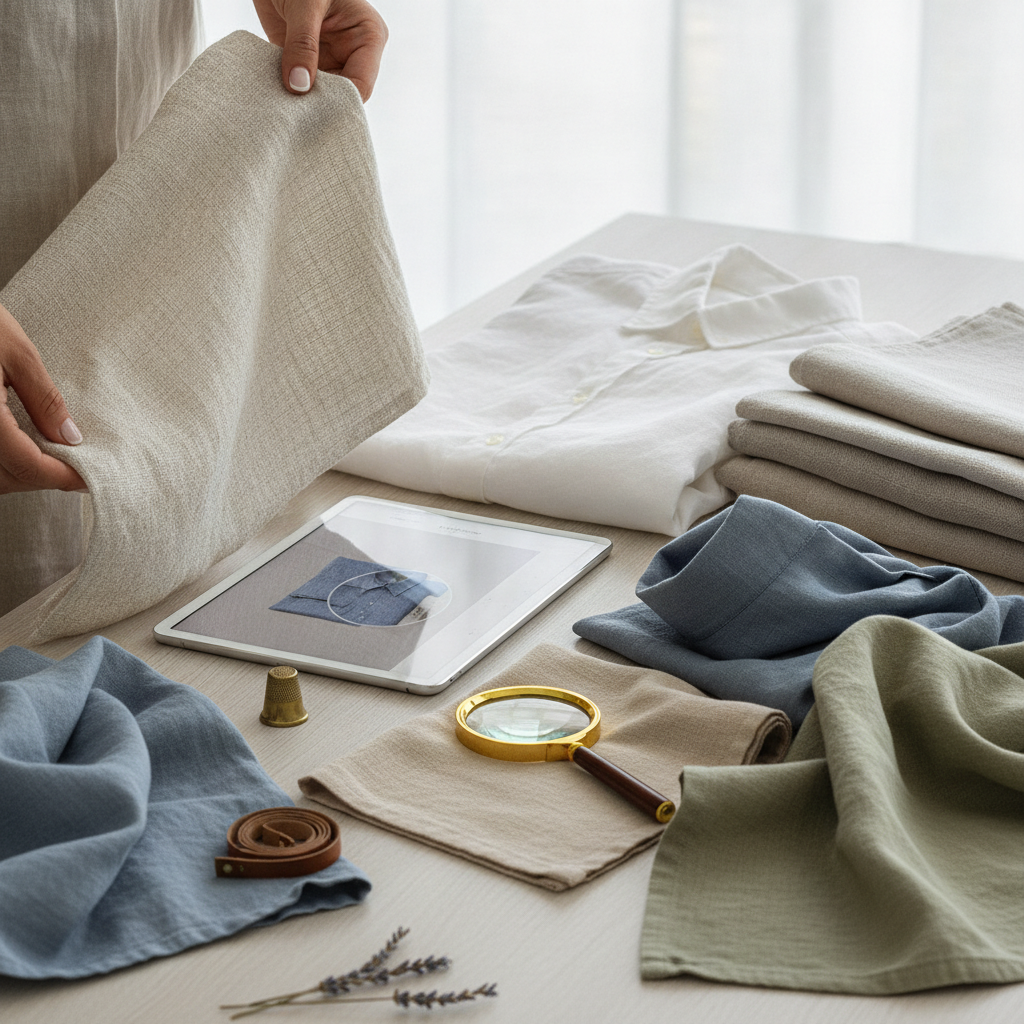
Linen is one of those fabrics that rewards the people who know what to look for and quietly disappoints everyone else. It's everywhere right now — draped across mannequins, styled in flatlay shots, stacked on shelves at every price point imaginable. But not all linen is created equal, and the difference between a piece that softens beautifully over years and one that pills after a single wash often comes down to a handful of details most shoppers overlook.
Whether you're standing in a store or scrolling through a product page at midnight, these checkpoints will help you buy with confidence.
Feel for Weight and Drape First
Good linen has substance to it. When you pick up a quality piece, it should feel substantial without being stiff — there's a gentle drape to it, a slight heft that cheaper blends tend to lack. Thin, papery linen is a red flag, especially in garments meant to be worn long-term. In-store, hold the fabric up to the light. A tight, even weave with minimal gaps signals better construction. Online, pay attention to fabric weight listed in grams per square meter — anything above 150gsm for clothing tends to indicate a more durable, well-constructed piece.
Check the Fiber Composition Label
This one sounds obvious, but it's easy to skip when you're excited about a piece. Genuine linen is made from flax fibers, and the label should say 100% linen — or, at minimum, clearly list linen as the dominant fiber. Linen-cotton blends are common and not inherently bad, but linen-polyester blends tend to lose the breathability and texture that make linen worth buying in the first place. Brands like Quince and Parachute are transparent about their sourcing and fiber content, which makes comparison shopping easier when you know what you're looking for.
Look Closely at the Stitching
Turn the garment inside out or zoom in on product photos whenever you can. Quality linen pieces will have tight, even stitching at the seams with no loose threads or puckering. Pay particular attention to stress points — the armpits of a shirt, the waistband of trousers, the corners of a pillowcase. Reinforced seams are a sign that the manufacturer expected the fabric to be used, washed, and worn repeatedly. Loose or uneven stitching at those junctions tells you the piece wasn't built to last.
Rub the Fabric Between Your Fingers
Linen has a natural, slightly textured feel — that subtle roughness is part of what makes it distinctive. What you're checking for here is whether the weave holds together under light friction or whether it starts to look stressed or fuzzy. A quality piece should feel firm and cohesive even when you apply gentle pressure. If the fabric shifts or distorts easily, it may be a looser weave that's more prone to pilling and wear. This test works particularly well in-store and takes about five seconds.
Assess the Color Consistency
Hold the piece flat and look at it in good light. Quality linen should have an even, consistent color with no obvious blotchy patches or fading variation across the fabric. Natural linen tones — undyed ecru, oatmeal, warm white — will have slight natural variation, which is normal and actually desirable. What you're watching for is uneven dye saturation on colored pieces, which can signal lower-quality processing. Online, this is where reading reviews with photos matters more than trusting the product images, which are often color-corrected.
Read the Care Instructions Carefully
This is a detail that often gets ignored until something goes wrong. Quality linen should be machine washable — linen that requires dry cleaning only is usually either heavily treated or blended in a way that compromises its durability. Brands like Bed Threads and Cultiver publish detailed care guides because they expect their products to be washed regularly. If a linen piece's care instructions seem overly restrictive for an everyday fabric, that's worth questioning before you commit to the purchase.
Research the Brand's Production Standards
For online purchases especially, a few minutes of research goes a long way. Look for brands that mention where their linen is sourced — European flax, particularly from France, Belgium, and Lithuania, is generally held to a higher standard than undisclosed sourcing. Oeko-Tex certification is a reliable marker that the fabric has been tested for harmful substances. Customer reviews that mention longevity after multiple washes are often more informative than any marketing copy. A slightly higher price from a transparent brand tends to outperform a bargain from one that's vague about its supply chain.
Trust the Natural Wrinkles
Linen wrinkles — that's simply what it does, and any brand that claims otherwise is selling you something heavily treated. What matters is the quality of those wrinkles. On a good linen piece, creases are soft and even, and they tend to fall out naturally with wear or a light steam. On lower-quality linen, you'll often see sharp, stubborn creases that don't relax and may even create weak points in the fabric over time. If a piece is marketed as "wrinkle-resistant linen," check the fiber label carefully — it's likely a blend with synthetic fibers doing the heavy lifting.
Knowing what to look for takes the guesswork out of linen shopping and makes it a lot more satisfying. The next time you're weighing up a piece, run through a few of these checks — you'll start to notice the difference almost immediately, and the pieces you bring home will reflect it.