Why Mapping Your Trip Around Transit Hubs Instead of Attractions Unlocks More Authentic Experiences
Michael Thompson
07/13/2026
5 min read
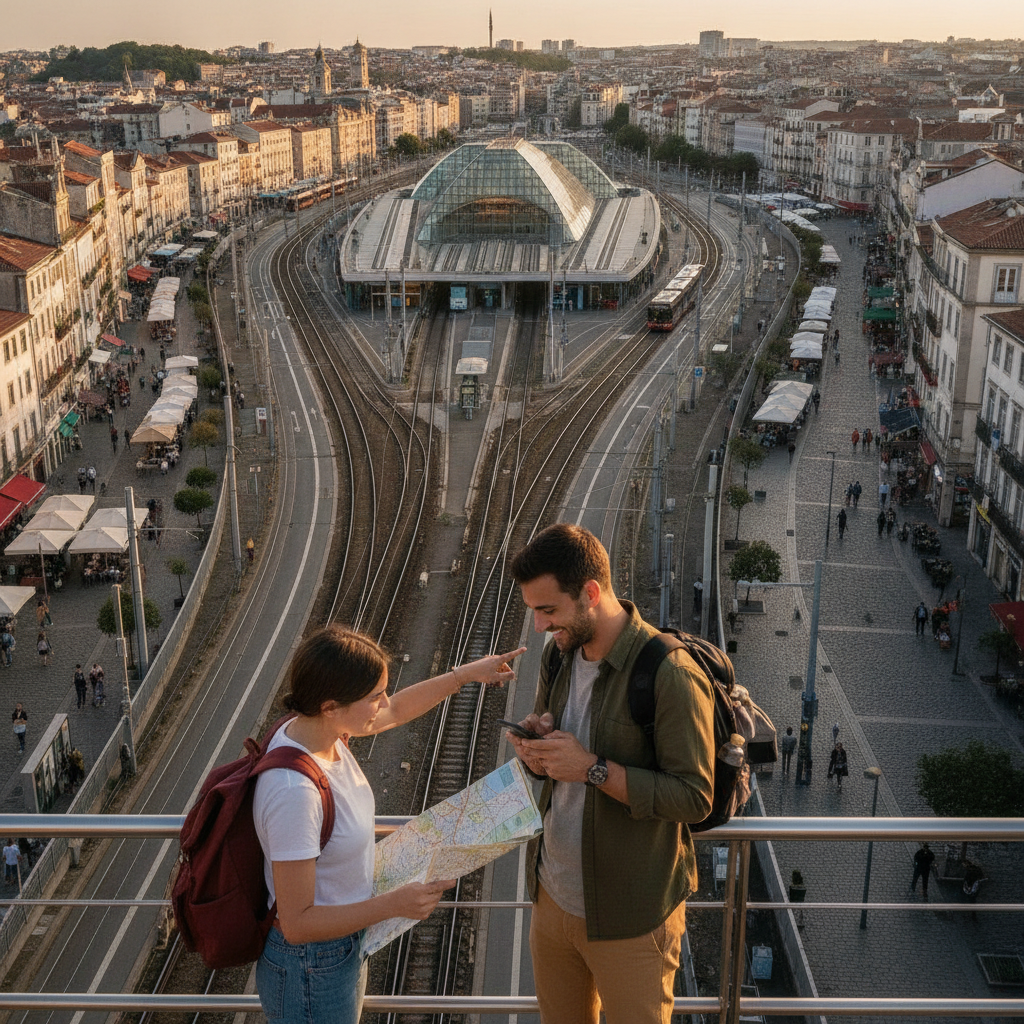
Most travelers build their itineraries the same way: pick the landmarks, then figure out how to get between them. It's a logical approach on the surface, but it tends to produce a particular kind of trip — one that feels more like a checklist than an experience. The traveler moves from monument to museum to viewpoint, often spending more time in transit than anticipated, eating at restaurants selected by proximity rather than curiosity, and returning home with photographs but little sense of how a place actually functions. There's a quieter method, less discussed but increasingly practiced by those who've grown tired of the highlights reel, and it begins not at the attraction but at the station.
The Logic of Building from Transit
Transit hubs — train stations, metro interchanges, ferry terminals, central bus depots — are among the most honest architectural expressions of how a city moves. They are designed not for visitors but for residents, which makes them an unusually reliable window into daily life. When a traveler chooses accommodation near a major interchange rather than near a famous square or boulevard, something subtle shifts in how the surrounding hours unfold. The streets nearby tend to be functional rather than curated. The cafés serve the morning commuter crowd. The market stalls stock items people actually need. A neighborhood anchored by a working transit hub — like those surrounding Shinjuku Station in Tokyo or the Gare du Nord corridor in Paris — exists primarily for the people who pass through it every day, and that residency shows in every storefront and side street.
Planning around transit also solves a problem that most itineraries quietly create: the friction of movement. When each day begins with a clear hub as the departure point, the mental overhead of getting somewhere drops significantly. Connections become intuitive rather than effortful. The traveler who bases themselves near Roma Termini in Rome or Centraal Station in Amsterdam finds that the city opens outward in every direction with minimal planning — and that the in-between moments, the platform waits and the short rides and the unexpected transfers, become part of the texture of the trip rather than obstacles to it.
What Gets Found in the Margins
The deeper value of transit-oriented travel lies in what it surfaces by accident. When the route between two points runs through an unfamiliar district, the traveler is placed, briefly and without agenda, in a context they didn't seek out. These unplanned corridors — the stretch between a metro stop and the main road, the square adjacent to a bus terminal, the covered market that exists primarily to serve commuters — are exactly where the character of a city tends to concentrate. The term flanerie, drawn from nineteenth-century French urban culture, describes the practice of wandering without destination, absorbing a city through observation rather than intention. Transit-oriented planning creates structured opportunities for exactly this kind of drift, without requiring the traveler to abandon all sense of direction.
Apps like Citymapper and Google Maps Transit have made it easier to read a city's network before arriving, which allows for a kind of pre-trip literacy that changes how the first day feels. Rather than disorientation, there's a working familiarity with how the lines run, where the major interchanges sit, and which neighborhoods cluster around them. That knowledge, even when partial, allows the traveler to move with a confidence that reads differently than the tourist shuffle — and that confidence, paradoxically, tends to attract more genuine interaction.
Reorienting the Idea of Discovery
There's a cultural assumption embedded in most travel advice that discovery means finding the hidden gem — the restaurant without a sign, the viewpoint locals supposedly keep to themselves. That framing places authenticity somewhere off the beaten path, as though the beaten path were contaminated by the act of being traveled. But authenticity in a city isn't a location. It's a quality of attention, and transit hubs — precisely because they're so well-traveled, so infrastructurally mundane — tend to reward the traveler who brings genuine curiosity rather than strategic searching. The ramen counter inside a Tokyo train station is no less real for being easy to find. The flower vendors outside a Paris metro exit aren't performing local color; they're simply doing what they do every morning.
For you, the practical shift is smaller than it sounds. Before the next trip, spend time with the transit map before the tourist map. Identify the two or three major interchanges in your destination city and look at what surrounds them — the neighborhoods, the market days, the types of businesses that cluster nearby. Let those hubs suggest where to stay rather than working backward from a landmark. Choose accommodation within walking distance of a working interchange rather than within sight of a famous cathedral. The cathedral will still be reachable, likely within twenty minutes, but the twenty minutes will carry you through streets that have nothing to do with tourism and everything to do with how that city actually breathes.
The traveler who arrives back from a trip and says the place felt real — that it didn't feel staged or exhausting or disappointingly crowded — is often someone who, perhaps without fully realizing it, spent more time in the transit corridors than the postcard zones. The logic circles back to where it began: the most honest version of a city isn't the version it presents to visitors. It's the version it builds for itself, and transit infrastructure is where that version is most plainly visible, most quietly alive, and most available to anyone willing to simply get on and ride.