How Keeping a Single Reusable Bag Dedicated to Travel Changes Your Packing Consistency Over Time
Sarah Mitchell
07/20/2026
6 min read
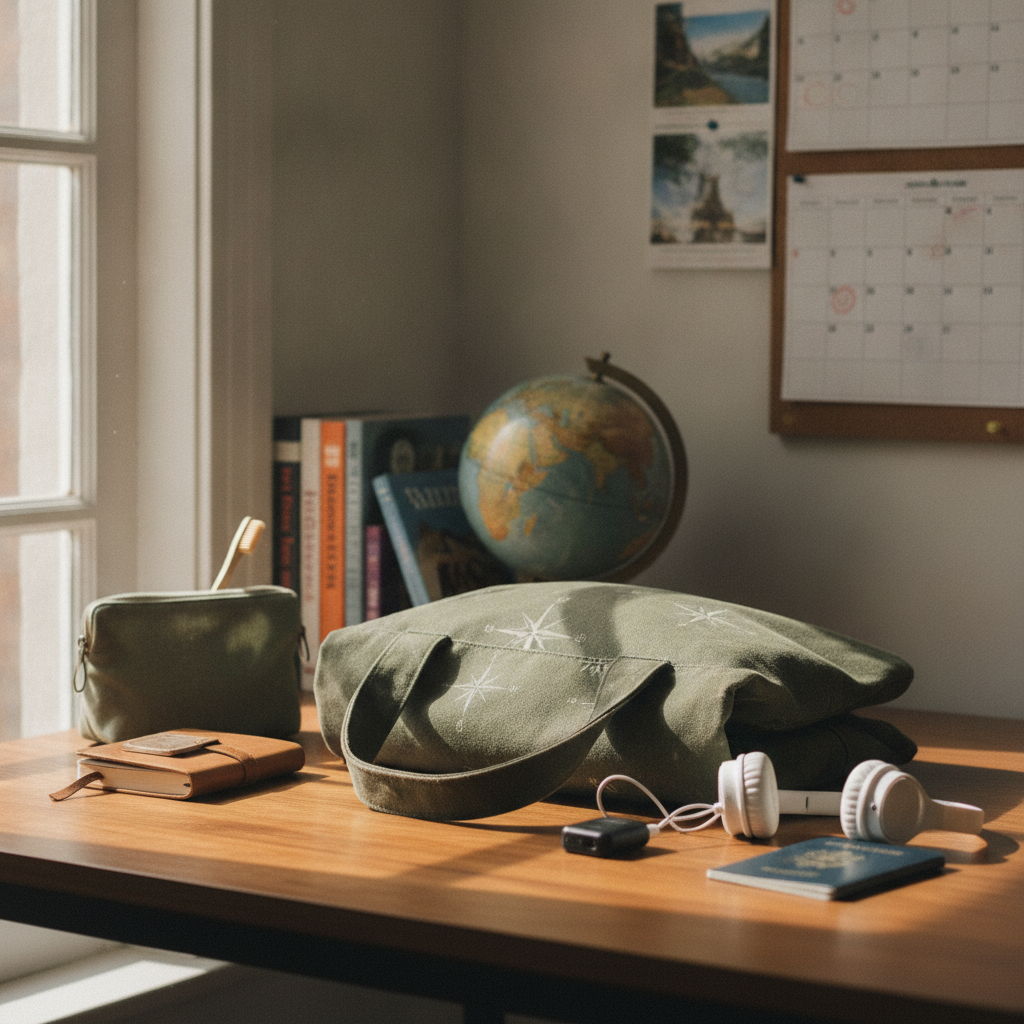
Packing consistency is one of those travel skills that sounds simple but takes most people years to actually develop. You've probably stood in front of an open suitcase more than once, pulling things in and out, second-guessing yourself on a Tuesday night before an early flight. The problem usually isn't that you don't know how to pack — it's that you're starting from scratch every single time. One small habit can quietly change all of that: keeping one dedicated reusable bag that lives with your travel gear and only your travel gear.
Choose a Bag With Structure, Not Just Capacity
The bag you pick matters more than you might expect, and it's worth spending a little time choosing one that works with how you actually travel. A structured tote or a medium-sized nylon foldable — something from brands like Baggu, Longchamp, or even a sturdy option from MUJI — gives you enough flexibility without becoming a catch-all. You want it to feel purposeful when you pick it up. A bag that collapses into nothing or has no internal organization tends to get filled randomly, which defeats the whole point. Think of it as a soft container for the small items that always seem to go missing.
Keep It Stored With Your Luggage, Always
Where you store this bag between trips determines how useful it actually becomes. Tuck it inside your carry-on or next to your suitcase so it becomes part of the same mental category as your luggage. When your brain starts thinking about a trip, the bag is already in frame. This matters because packing is as much a cognitive process as a physical one — you're reconstructing a mental checklist every time you prepare to leave. Keeping the bag with your travel gear means you stop treating it like a general household item and start treating it like a travel tool with a specific job.
Use It to Stage Items Before You Pack
One of the most underrated functions of a dedicated travel bag is staging. In the days before a trip, you can toss things into it as you think of them — your travel-size charger, the headphone adapter you always forget, a small notebook. This isn't the same as packing; it's pre-packing without the pressure of a half-open suitcase staring at you. Over time, this staging habit starts to reveal your actual patterns. You'll notice you always grab the same four things first, which tells you something useful about what you actually need versus what you think you need when you're packing in a rush.
Let It Become a Memory System for Small Essentials
The bag starts doing something interesting after a few trips: it becomes a passive memory system. Because you return the same small items to it after every trip — your compression cubes, your travel pill organizer, your folded sleep mask — you stop having to remember where things are. The bag holds that information for you. Travelers who swear by packing cubes and dedicated pouches are essentially describing this same principle at a larger scale. When your brain offloads the where-did-I-put-it question to a physical system, it frees up more attention for the actual trip planning, the routing, the logistics that genuinely require thought.
Resist the Urge to Borrow From It for Everyday Use
This is where the habit either holds or falls apart. The moment you start pulling things from your travel bag for everyday errands — grabbing the small scissors, borrowing the travel umbrella — you break the system. It sounds minor, but it means that next time you're packing, you're doing an audit instead of a check. Keep the bag off-limits for non-travel use, even when it feels inconvenient. If you travel to cities like Tokyo or Amsterdam where you'll want a compact umbrella, keep a separate one at home and leave the travel version exactly where it belongs. The discipline here is what builds the consistency over time.
Review and Reset the Bag After Every Trip
Building a short reset ritual after each trip — maybe ten minutes when you get home — keeps the system clean and honest. Empty the bag, check what you used, note what you didn't touch, and put everything back intentionally. This is how the bag gradually becomes smarter. You'll naturally stop including things that come home untouched three trips in a row, and you'll start adding things that you had to scramble to find mid-trip. Think of this reset as a small debrief. It's not about perfection — it's about letting real experience shape what goes into the bag rather than anxiety or habit.
Use the Bag to Signal the Start of Trip Planning
There's a psychological side to this habit that's easy to miss. Taking out the dedicated bag and setting it somewhere visible is a low-effort signal that trip planning has officially begun. It shifts your mindset without requiring any big decision. You're not committing to an itinerary or booking anything — you're just acknowledging that a trip is coming, and your system is getting ready. Travelers who rely heavily on apps like TripIt or Notion for trip organization often describe needing a physical anchor to make planning feel real. A visible bag on a chair or shelf can serve that same function, bridging the mental and the practical in a way a folder on your phone doesn't.
Track What the Bag Teaches You Over Several Trips
After six months or a year of using the same dedicated bag consistently, patterns become genuinely informative. You'll have a clear picture of your packing style — whether you over-prepare for tech, under-prepare for comfort, or consistently forget something in a specific category. This kind of self-knowledge is hard to develop when every trip starts from a blank slate. The bag acts like a low-tech log of your travel behavior. Frequent travelers who've adopted this habit often find that their overall packing gets lighter and faster, not because they tried to minimize, but because the bag naturally filtered out the noise over time.
As travel habits continue evolving — with more people mixing remote work and leisure trips, taking shorter but more frequent getaways, and moving between different types of accommodation — the value of a simple, consistent packing system only grows. The dedicated bag isn't a trend; it's a foundational piece of a personal system that compounds quietly in the background. The more trips it makes with you, the more it works. Start with one bag, keep it honest, and let the habit build itself.