What Booking a Slow-Train Route Instead of the Fastest Connection Actually Adds to a Trip
Robert Kim
07/17/2026
5 min read
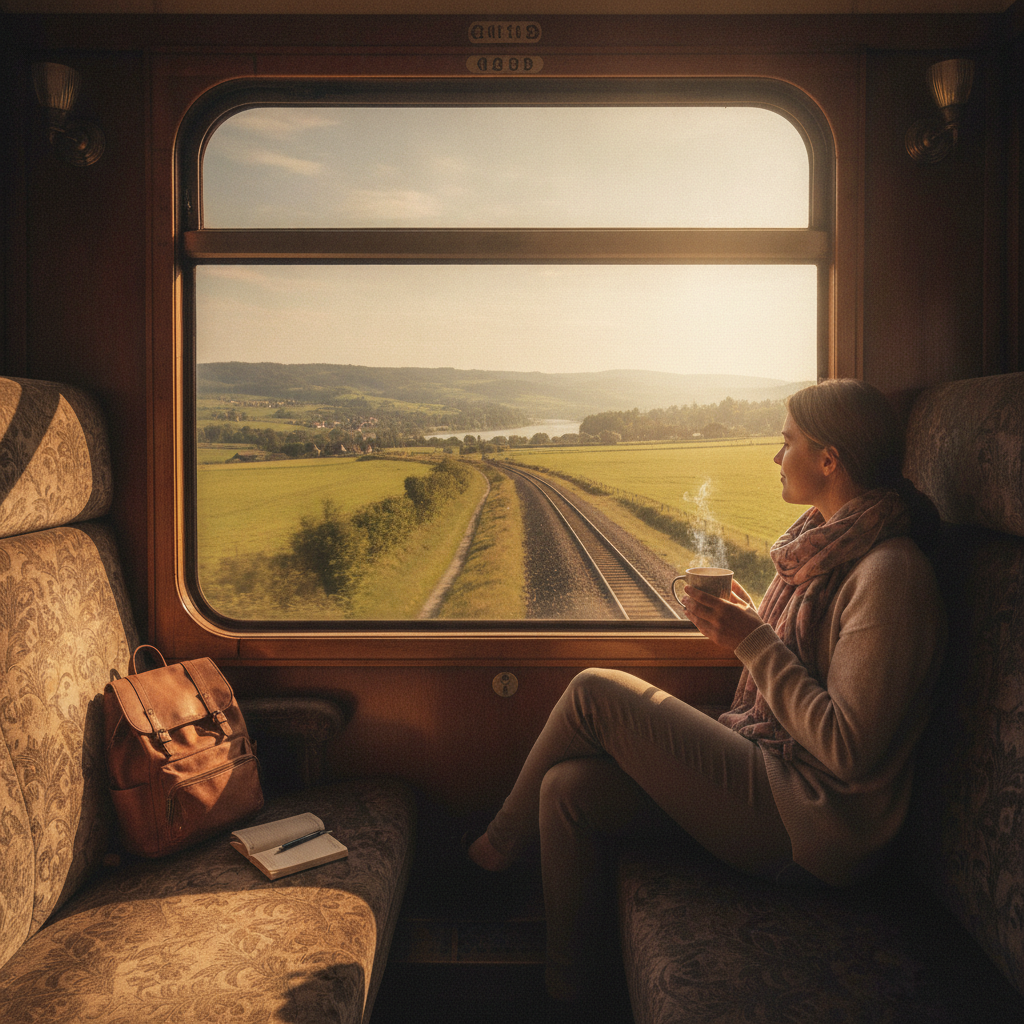
Speed has a cost that train schedules rarely print. Most travelers reach for the fastest connection almost by instinct — shaving an hour here, a transfer there, optimizing the journey down to something that resembles a chore rather than an experience. But a growing number of thoughtful travelers are making a different choice: the slower route, the regional line, the train that stops at small stations and takes its time winding through countryside that high-speed rail bypasses entirely. What they find on the other side of that decision is difficult to quantify but easy to recognize.
When the Journey Becomes Part of the Destination
The Italian concept of dolce far niente — the sweetness of doing nothing — captures something that slow train travel delivers almost automatically. There's no hustle to make a tight connection, no anxiety about arriving depleted. The train moves, and the world outside the window moves with it. Villages appear and recede. A river follows the track for a while and then disappears into a hillside. Passengers settle. On routes like the Cinque Terre Express along the Ligurian coast or the Glacier Express through the Swiss Alps, the train itself is the event — designed not for efficiency but for the quality of what passes by the glass.
This shift from transit to experience is subtle but significant. The body has time to arrive before the body actually arrives.
The Stations That Don't Make the Guidebooks
Fast rail is engineered to connect major hubs. Regional and scenic routes are engineered to connect communities. The difference shows up in what travelers encounter along the way. A slow train through the Dordogne in France or the Douro Valley in Portugal stops at platforms where a handful of locals board with groceries and bags that suggest they live there rather than visit. These aren't tourist moments — they're glimpses into the ordinary rhythms of places that rarely appear in travel content.
There's a particular kind of awareness that comes from watching a place live rather than being guided through its highlights. The traveler who rides the regional Trenitalia lines through smaller Tuscan towns rather than sprinting between Florence and Rome on the Frecciarossa picks up a different texture of the country — less manicured, more real. A thirty-minute stop in a town with a single café and a piazza that isn't on any map can reframe an entire trip.
What Slow Travel Does to Your Pace of Mind
The practical benefits of choosing the slower route go beyond scenery. Slower trains are almost always cheaper, sometimes significantly so — a detail that allows travelers to extend a trip or reinvest savings into a better meal or an extra night. They're typically less crowded outside of peak commuting hours. The seats are often older, roomier, and carry a charm that modern high-speed interiors lack.
But the real benefit is internal. Travel fatigue — the particular exhaustion that comes from constantly optimizing, catching connections, and treating movement as a problem to solve — doesn't accumulate in the same way on a slow route. The hours pass differently. Books get read. Thoughts arrange themselves without being forced. Conversations with fellow passengers happen naturally because no one is sprinting anywhere. There's a German word, Entschleunigung, that translates roughly as deceleration — the deliberate act of slowing down as a form of restoration. Slow train travel is that concept made physical.
A traveler who arrives after four unhurried hours on a regional line through the Scottish Highlands is in a fundamentally different state than one who compressed the same distance into ninety minutes. Both have traveled. Only one has arrived ready to be somewhere.
Choosing the Route Worth Taking
This is where the practical side of the choice matters. Not every slow route is scenic, and not every regional line rewards the extra time. Researching before booking — using resources like The Man in Seat 61, a well-regarded independent rail travel guide, or the Railpass planner on Eurail's platform — helps identify routes that are genuinely worth the slower pace. The key questions are simple: What does this route pass through? Where does it stop? Is the time difference meaningful or marginal?
Some routes are renowned for a reason. The West Highland Line in Scotland. The Bernina Express between Switzerland and Italy. The Rocky Mountaineer in Canada. Others are quieter discoveries — a regional line in Japan's Shikoku prefecture, a coastal route through northern Spain along the Transcantábrico corridor — that reward travelers willing to look past the standard itineraries. Apps like Omio or Rail Planner make it easier to compare fast and slow options side by side, which is often the first moment travelers realize how narrow the time difference actually is.
Rethinking What Efficiency Actually Means on a Trip
Efficiency in travel is often measured in time saved. But there's another way to measure it: value generated per hour of the journey. By that standard, a slow train through remarkable landscape — where the hours spent moving are themselves restorative, visually rich, and culturally textured — is more efficient than a fast connection that delivers a person to a destination slightly worn down and slightly disconnected from where they are.
The traveler who chooses the slow route isn't sacrificing time. They're redirecting it. The hours on the train aren't hours lost to the trip — they're hours that belong to it.
This reframe doesn't require a philosophical commitment to slow travel as an identity. It only requires pausing, once, when booking, to ask whether the fastest option is actually the best one. Sometimes it is. Sometimes the regional line that takes an extra ninety minutes passes through something that the high-speed route tunnels under entirely — and that ninety minutes turns out to be the part of the trip that stays with you longest. Speed has a cost that train schedules rarely print, and the traveler who learns to read that cost differently tends to come home with something extra that no itinerary planned for.