The Case for Keeping a Standing Social Ritual That Has Nothing to Do With Productivity
Marcus Chen
07/11/2026
5 min read
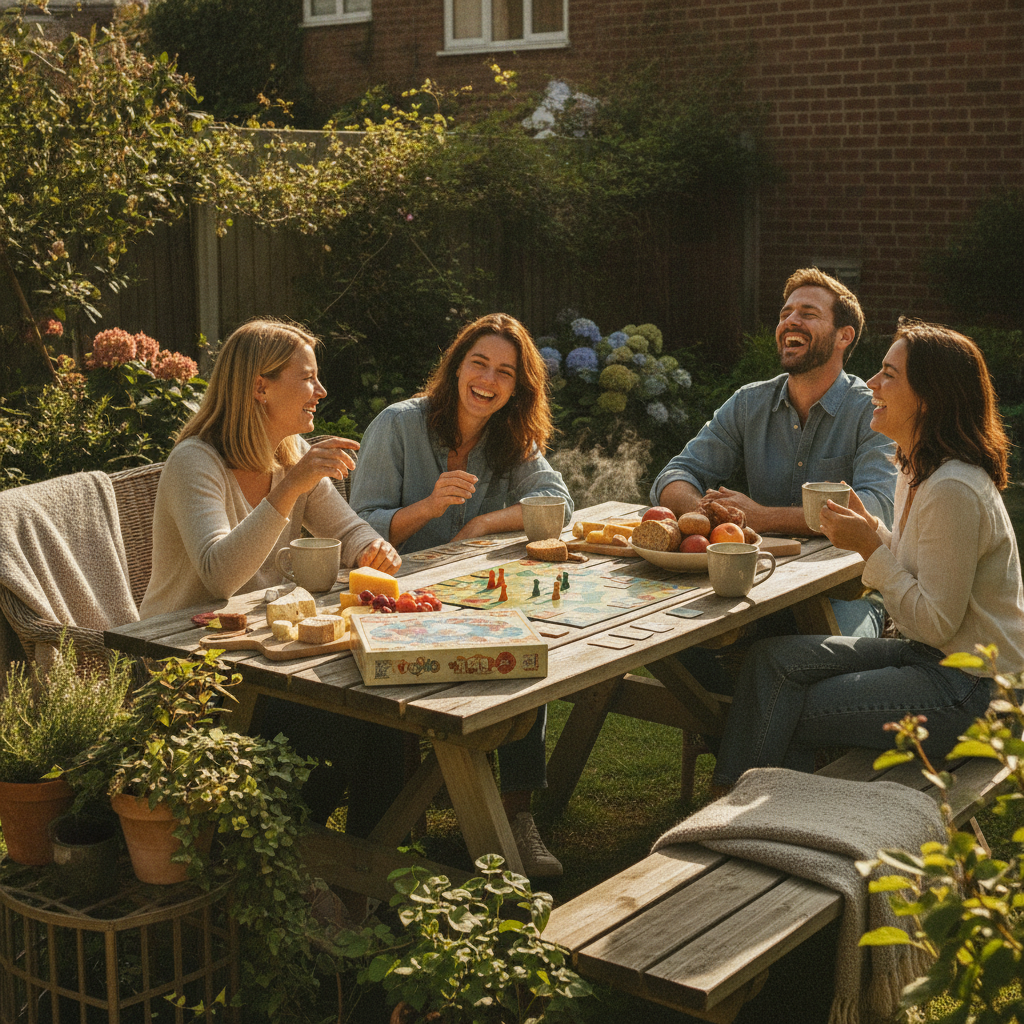
Most of the recurring commitments adults keep are quietly justified by their usefulness. The weekly gym session, the Sunday meal prep, the early morning run — each one earns its place in the calendar by delivering something measurable. It's rarer, and perhaps more radical, to hold space for something that delivers nothing in particular, that exists simply because it exists, and because the people involved agreed, long ago, to keep showing up.
What Is a Standing Social Ritual, Exactly?
A standing social ritual is a recurring gathering — weekly, monthly, or otherwise — that runs on its own logic, separate from ambition, productivity, or self-improvement. It might be a Wednesday evening card game in someone's kitchen in Portland, a Sunday afternoon walk that ends at the same café, or a monthly dinner among old friends where the menu never really changes. The defining quality isn't the activity itself, but the commitment to repetition without agenda. These gatherings exist in a category the Germans might call Geselligkeit — a word describing the warm, convivial pleasure of simply being together — and that quality is precisely what makes them worth protecting.
Why Modern Life Keeps Eroding These Spaces
The rhythms of contemporary life are not particularly kind to open-ended commitments. Calendars fill from the outside in, remote work has blurred the edges of professional time, and even leisure has developed a productivity complex — hobbies become side businesses, friendships become networks, dinners become opportunities for useful conversation. The social rituals that survive this pressure tend to be the ones with a clear deliverable: a book club that produces discussion, a running group that logs miles. The ones without measurable output are, quietly and without ceremony, the first to be cancelled. This is a loss that's easy to miss because it happens gradually, and because nothing obviously breaks when a standing gathering dissolves.
How Ritual Differs From Simply Making Plans
The distinction between a ritual and a regular plan is more meaningful than it might appear. Making plans requires negotiation, scheduling, and often a reason — something worth gathering for. A ritual, by contrast, operates more like a standing wave: it doesn't need a reason because the reason is already built in. Anthropologists have long observed that ritual functions as social glue precisely because it's non-negotiable, because it recurs regardless of circumstance, and because its repetition signals, over time, that the relationship is durable. The weekly Sunday lunch shared among families in places like Buenos Aires or Thessaloniki isn't organized around a particular agenda; it persists because its persistence is the point. That continuity carries a kind of meaning that spontaneous plans, however warm, simply cannot replicate.
What These Rituals Actually Provide
The value of a standing social ritual tends to reveal itself in absence rather than presence. When the gathering disappears — because someone moves, because schedules collapse, because life intervenes — what's lost isn't just an activity but a particular quality of time. These rituals create what psychologists call low-stakes continuity: the experience of being known and expected over a long stretch of time, without performance or effort. There's no need to catch up, because catching up is built into the structure. The Tuesday trivia night at a neighborhood bar in Chicago or the monthly potluck that's been running for seven years doesn't ask its participants to be interesting or impressive. It asks only that they return, which is a surprisingly profound form of care.
How Ritual Time Feels Different From Productive Time
Time spent inside a standing ritual has a different texture from time spent completing tasks, even enjoyable ones. It tends to move more slowly, to feel less instrumental, and to leave behind a residue of ease that productive accomplishment rarely delivers. This quality has been described in various traditions — the Japanese concept of ma, or meaningful negative space, touches on something similar: the idea that emptiness and pausing have their own integrity, that not every moment needs to be filled with forward motion. A standing social ritual is, in some ways, a scheduled instance of ma — a recurring gap in the relentless forward pull of useful time, where presence is the only requirement and belonging is the only output.
Why the Ritual Needs to Be Protected Deliberately
Because standing rituals produce nothing that shows up on a dashboard or a list, they require active protection in a way that productive commitments do not. Nobody cancels a work deadline because something more interesting came up. Standing social rituals, which lack that kind of institutional gravity, are perpetually vulnerable to the reasonable logic of rescheduling. This is why the communities that maintain them best tend to treat them with a firmness that can look, from the outside, almost stubborn — the kind of quiet insistence that says this matters not because of what it produces but because of what it is. In the Scandinavian tradition of fredagsmys — a Friday evening ritual of gathering and unwinding — the habit is culturally protected precisely because the culture has agreed, collectively, that it is worth protecting.
How to Think About Starting or Keeping One of Your Own
If there's a standing ritual in your life that still holds, this is a moment to recognize it clearly and defend it with more intention than it currently receives. If there isn't one, the question worth sitting with isn't which activity to build it around, but who you'd want to keep showing up for, and how often. The activity itself matters less than the repetition. A monthly dinner in someone's apartment, a Sunday evening walk through the same streets of your neighborhood, a video call with the same three people every other week — the form is almost incidental. What matters is the agreement to return, and the willingness to treat that agreement as something close to sacred, even when nothing particularly interesting happens when you do.
Most of what adults schedule is shaped, in some way, by what it will produce. The standing social ritual asks to be held differently — not as an investment in a future outcome, but as a quiet, recurring declaration that certain people and certain moments are worth showing up for simply because they are. That may be the most quietly countercultural thing a person can choose to protect.